
AI EQUITY FRAMEWORK
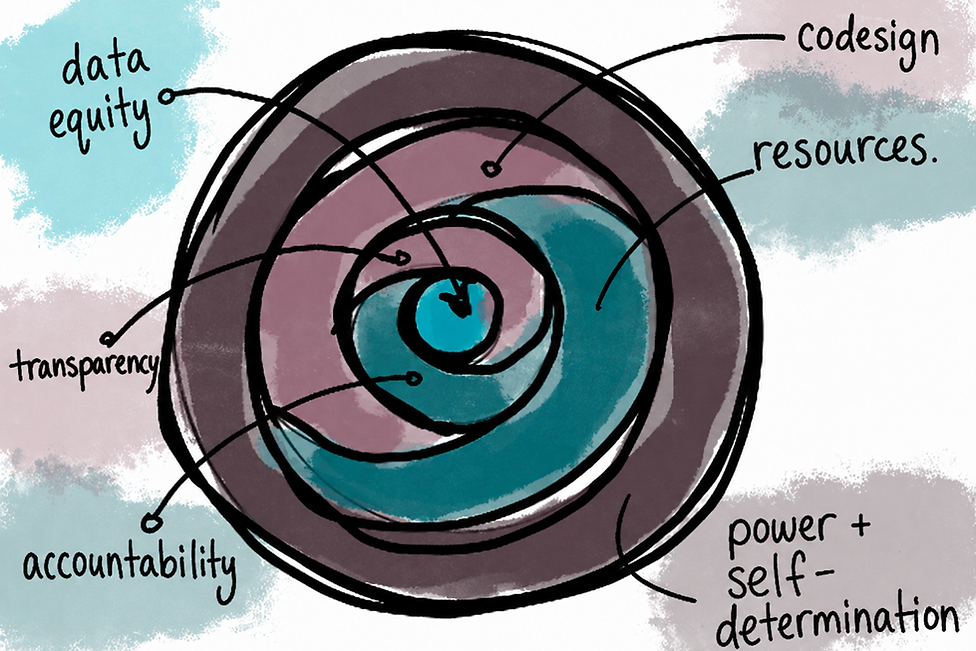
A nested model for designing equitable AI in nonprofits
Three years of AI Equity Project research pointed to a need for more than findings. The sector needed a shared structure for asking better questions about AI—before, during, and after adoption. In 2026, that learning became the AI Equity Framework.
THE MODEL
Six layers, one structure
The framework is nested, not linear. Each layer shapes the ones around it—data practices influence transparency, resources shape participation, and power determines who can refuse. Together they give nonprofits, funders, and technology partners a shared way to examine whether AI decisions distribute benefits, risks, voice, and responsibility fairly.
01
Data Equity
Ensuring data practices are grounded in justice, consent, and community benefit.
WHAT IT ASKS US TO EXAMINE
Whose data are represented, protected, excluded, or put at risk—and whether data practices are fair enough to support responsible AI.
04
Resource Equity
Ensuring equitable access to AI tools, funding, and capacity-building support.
WHAT IT ASKS US TO EXAMINE
Who has the money, time, staff capacity, training, and technical support to participate safely in AI adoption.
02
Transparency
Making AI systems explainable and their decision-making processes visible.
WHAT IT ASKS US TO EXAMINE
What data, assumptions, limitations, and uses are visible to the people affected by the system.
05
Co-Design & Participation
Ensuring those most affected co-design and govern AI systems.
WHAT IT ASKS US TO EXAMINE
Whether staff, communities, and people affected by AI decisions have meaningful opportunities to shape them.
03
Accountability
Establishing clear accountability when AI systems cause harm.
WHAT IT ASKS US TO EXAMINE
Who owns the decision, who responds when something goes wrong, and whether people have a meaningful path to raise concerns or appeal.
06
Power & Self-Determination
Centering community power and ensuring those most affected have authority over AI design and use.
WHAT IT ASKS US TO EXAMINE
Whether people retain agency, refusal, human review, and influence over how AI changes decisions that affect them.
CONTINUE THE STORY
From curiosity to accountability
The AI Equity Project is designed as a multi-year body of learning, not a one-time snapshot. Explore how the sector moved from cautious curiosity in 2024 to active experimentation in 2025—and toward questions of accountability, impact, and stewardship in 2026.